Introducing Ethena Pay
The internet money app: save, send and spend anywhere in the world with just a phone and an internet connection.
The internet money app: save, send and spend anywhere in the world with just a phone and an internet connection.
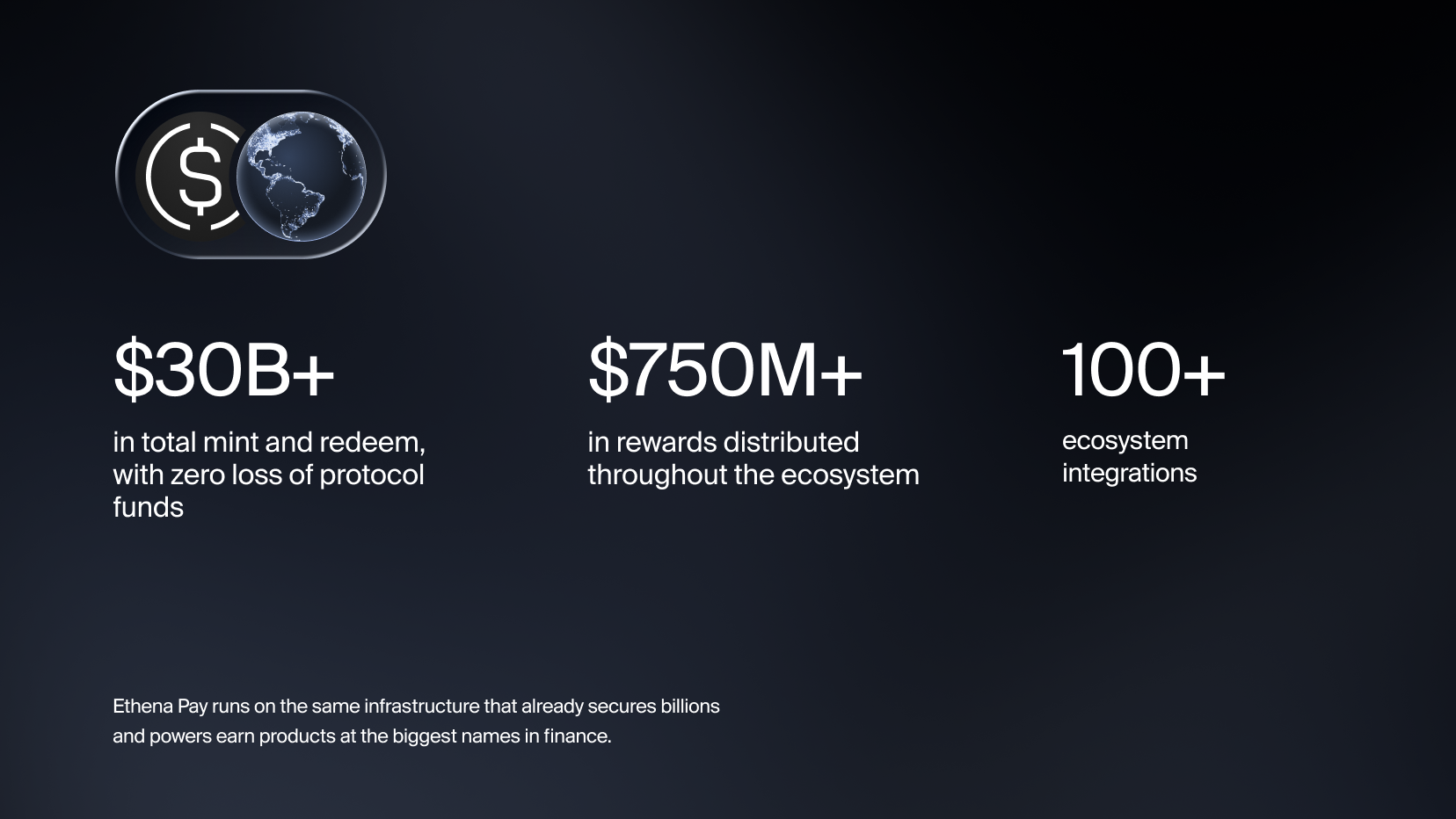
Since launching USDe in February 2024, Ethena has grown into one of the largest digital dollars in the world, with more than $30bn moving through mint and redeem systems with zero loss of protocol backing across every major market stress event. Over $750m in rewards have been distributed to Ethena ecosystem participants to date. USDe grew past $15bn at its peak and is integrated across more than 100 venues and protocols, including Robinhood, Coinbase, Binance, Bybit and BlackRock Aladdin.
While the infrastructure has historically served primarily traders, institutions and onchain users, the real opportunity exists outside of the space: to provide the next generation of personal finance technology for the 7 billion people who aren’t already onchain in a user experience and form factor they are used to - a mobile banking application.
Financial services for most people on earth are quite simple: to send, spend and save in your local currency and/or dollars. Today we are launching Ethena Pay, the best mobile neobanking experience to save, send and spend, built directly on Ethena’s existing products.
Ethena Pay offers free onramps in local currency and dollars, free and instant movement of money, zero FX fee mark up, up to 5% card cashback and the highest sustainable rewards on dollar balances via Ethena, alongside a multi-currency fiat account and a self-custodial stablecoin wallet in a single interface. The product is built on stablecoin and blockchain rails, while abstracting away the underlying technical complexity to deliver a simple, intuitive experience built around familiar user actions
Money still moves on decade-old rails
The experience of holding and moving money today is defined by the infrastructure powering banking apps. Cross-border transfers take days to settle while the average bank savings account pays around 0.4%. Every neobank currency conversion carries a spread the user rarely sees, and holding more than one currency means holding more than one account.
Two decades of fintech have improved how people reach these products through cleaner interfaces, faster onboarding and mobile distribution, but the rails underneath (such as sponsor banks, card networks, ACH and SWIFT) have remained largely entrenched.
Neobanks became distribution businesses sitting on top of the same bank rails, where the bank holds the deposit and keeps the interest margin, leaving the neobank with just the interchange revenue.
Competition for most neobank apps then plays out on the minor features: card colours, signup bonuses and cashback promotions, all funded out of a thin slice of the overall economics. Rebuilding these product experiences on stablecoin rails entirely rearchitects the back end to drive more value back to the most important participant in the value chain - the users.
Digital dollars change the economics of neobanks
Digital dollar rails replace core banking functions in software, settling on open networks in seconds at close to zero cost. This brings the fixed cost of launching a finance-first product down from millions of dollars through banks to just thousands by using on-chain infrastructure.
The deposit layer is where this matters most, because whoever issues the dollar earns the revenues from the reserves backing it. Consumer crypto apps today route their float to a third-party issuer and capture virtually none of that revenue, which is why their savings rates and cashback ceilings remain low. Other apps are forced to boost their saving rates with unsustainable incentives and restrictive caps.
Ethena issues the key underlying asset of Ethena Pay and every USDe balance held in Ethena Pay allows for the full backing revenue to stay inside the Ethena ecosystem.
That single structural difference is what funds the highest rewards in the market alongside free onramps, with no annual fee and no cap on assets users can earn rewards for.
What Ethena Pay does best
Earn on every dollar, every day, by default
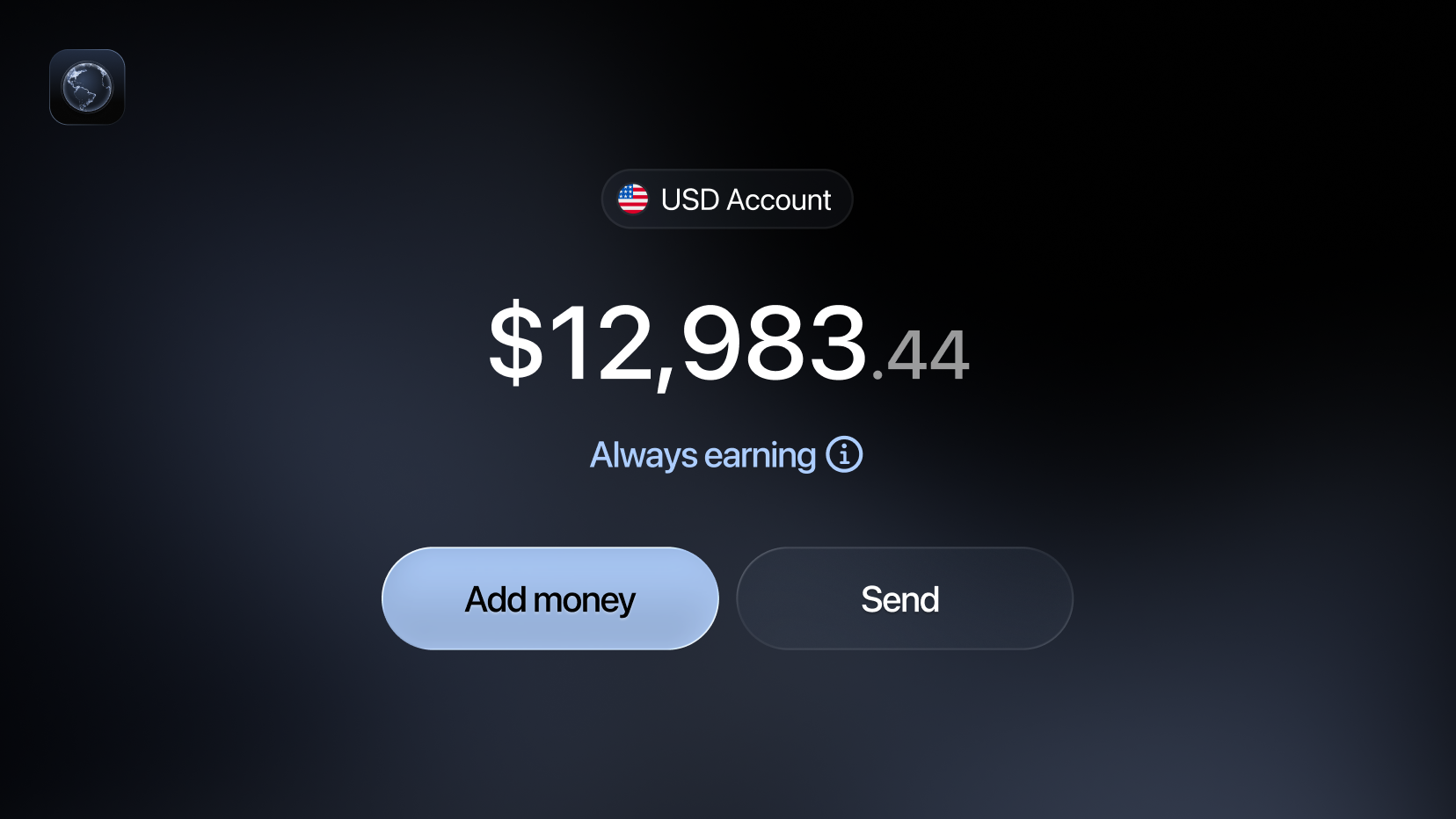
Ethena Pay offers up to 6% rewards on dollar balances, daily, on your whole balance by default, so money starts earning the moment it lands. Nothing to stake, nothing to lock and nothing to opt into.
Adding a card to USDC and USDT spending leaks value to external stablecoin issuers which can be internalized within the product. Ethena owns the token issuance and underlying backing revenue in a vertically integrated solution which is a structural advantage vs. competitive offerings.
Ethena Pay makes earning the default state of money inside the account, and multi-currency balances will earn the same way, with EUR, JPY, BRL and others earning by default as they arrive via free local onramps, powered by a sustainable reward rate. Earning down to the second you spend.
One of the most competitive cashback offers in the market
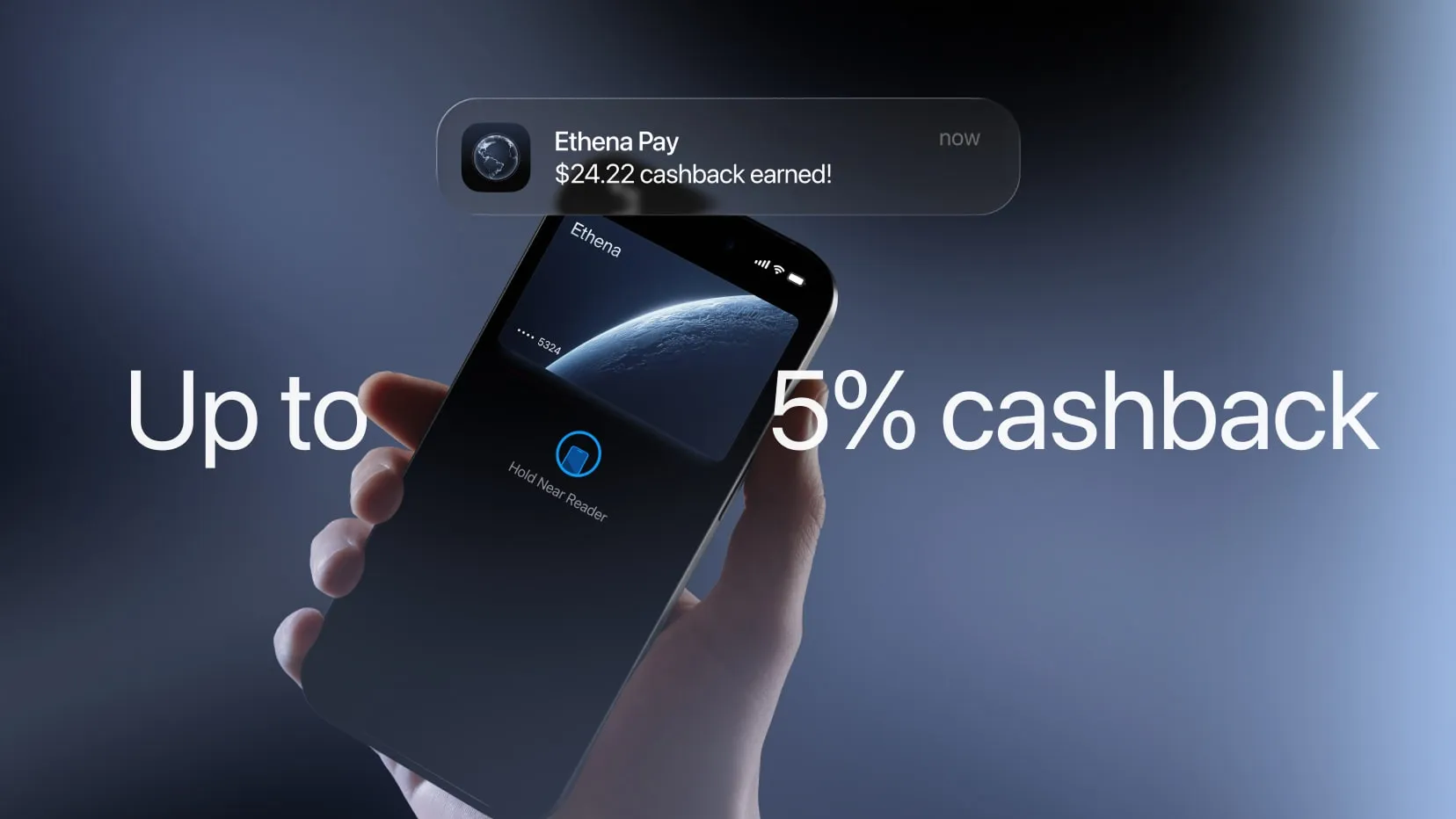
Up to 5% back on every purchase, online and in-store. Generate a virtual card in under a minute and add it to Apple Pay or Google Wallet in seconds.
Ethena Pay cashback has one of the highest caps in the market across the Free, Pro and VIP tier.
Free onramps in dollars and local FX
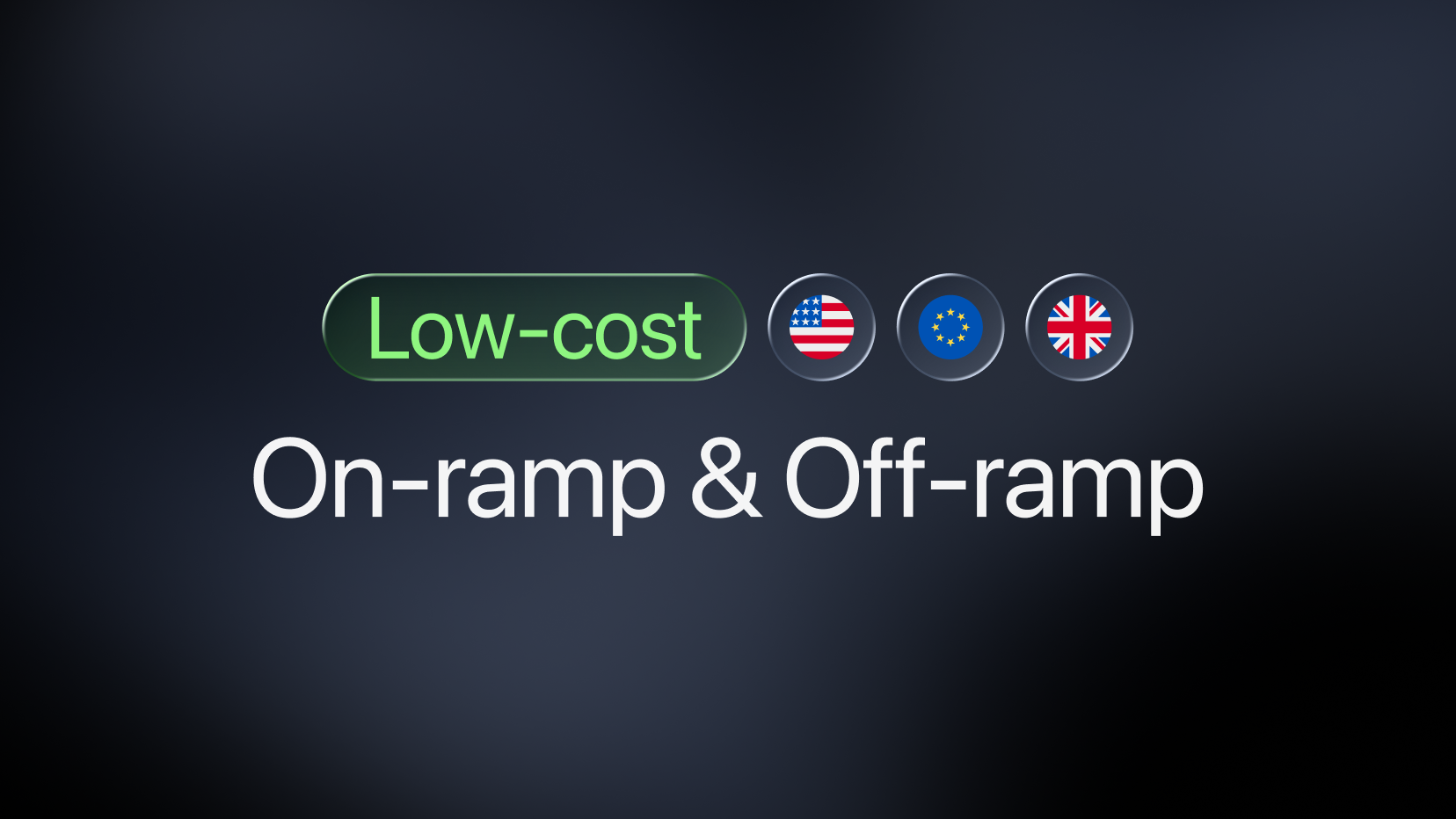
The cost of getting money in and out of a financial application has been one of the largest hidden taxes on users, with crypto apps charging on deposit and withdrawal, card programs charging on FX and banks charging on wires.
Ethena Pay is free to fund in digital dollars. USD and non-USD bank deposits are at market-leading rates, with fiat deposits free and withdrawals at a nominal cost.
Free, instant global transfers
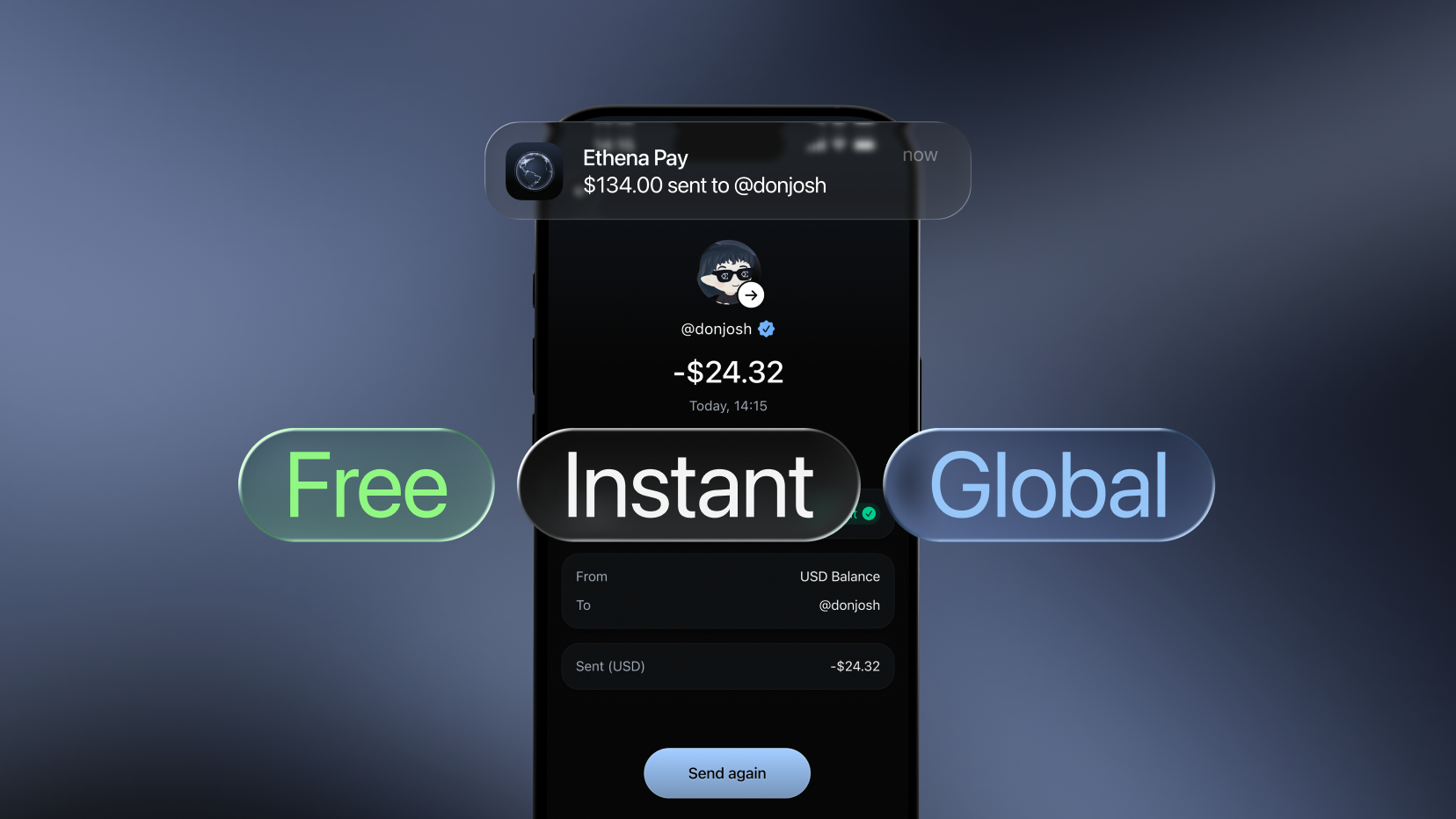
Send to any Ethena Pay user by name in seconds at no cost. Send to any wallet, or withdraw straight to a bank, with instant notifications tracking every transfer.
Digital dollars settle directly between two accounts on an open network, at any hour, in seconds, at a cost close to zero. Ethena Pay absorbs that small cost completely, resulting in zero transfer costs to the user.
One account for fiat and digital dollars
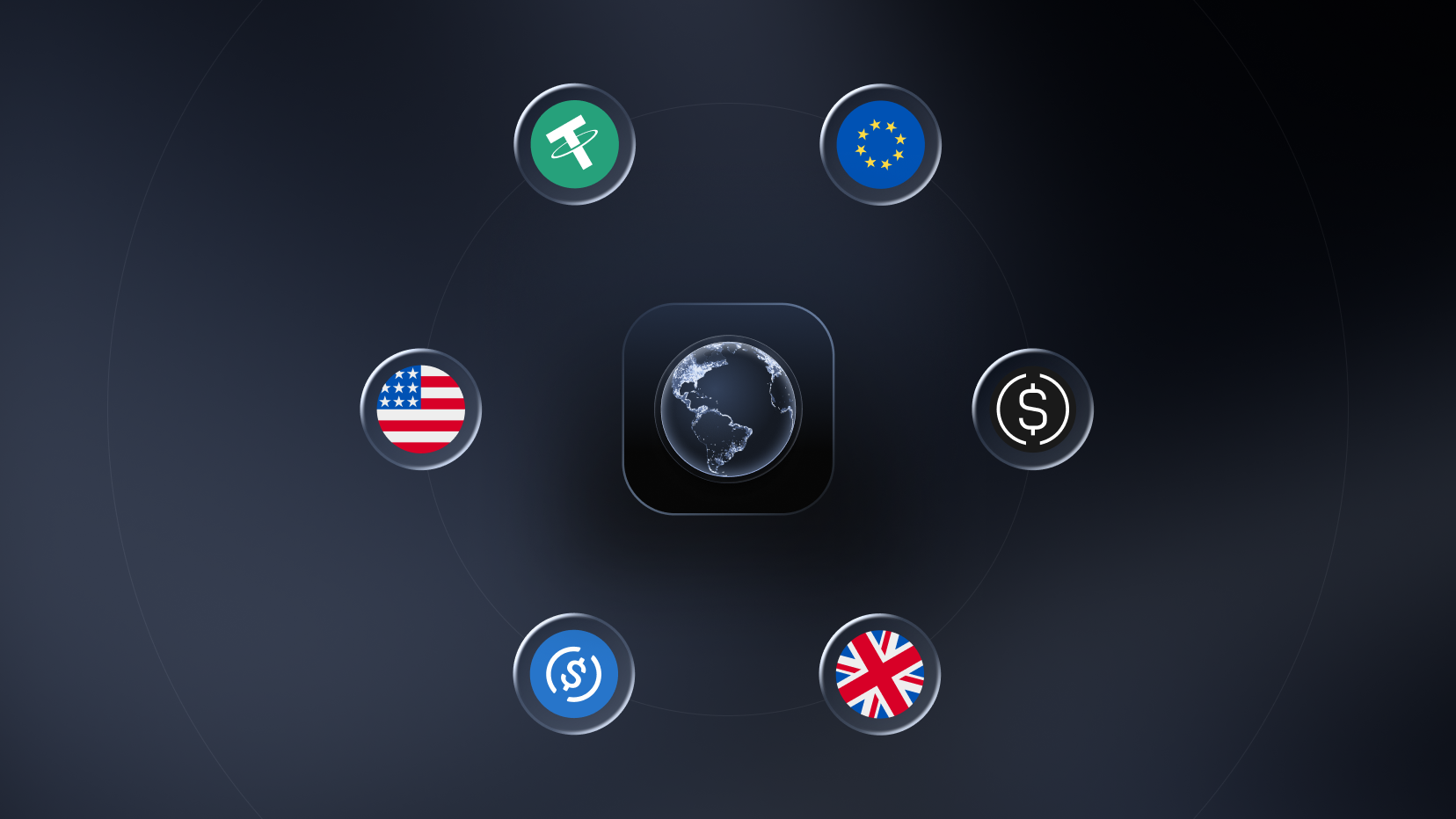
Every Ethena Pay user receives a virtual IBAN alongside a self-custodial digital dollar balance in a single interface, with transfers between fiat and digital dollars running seamlessly inside the account. The complexity is abstracted away from the user experience, offering seamless fiat to crypto rails.
These two things have lived in separate systems until now. A bank account requires fiat rails, and usually the bank holds the money; a self-custodial wallet leaves the money with the user, and it sits outside the banking system. Ethena Pay runs both inside one interface, so users get payroll, direct debits and bank transfers on one side and full ownership of the balance on the other, no banks involved.
Ethena Pay is non-custodial, so Ethena Pay never holds your money and you can withdraw to a wallet or a bank at any time, with sign-in secured by passkeys and Face ID or fingerprint and data encrypted end to end.
Enhanced Earn
Ethena’s wide integrations across DeFi unlock several interesting products for end users. One of those products will utilize third-party looping strategies with USDe in DeFi where users will be able to earn a higher return in one click, on the same rails and partners already managing third-party products servicing a significant amount of USDe supply today. This will provide users not familiar with interacting onchain a simple one click experience to access some of the most attractive savings rates in DeFi with all of the complexity abstracted away.
Why Ethena is best placed to build a neobank
Ethena owns the issuance, so Ethena owns the revenue
A bank holds the deposit on its own balance sheet, earns net interest margin and passes a fraction of it back to users. A neobank depends on that margin just as heavily, with Revolut drawing roughly 50% of its revenue from net interest margin and Robinhood roughly 37%, earned by routing customer deposits through a sponsor bank and sharing revenue with the bank that holds it.
A standard crypto neobank captures almost none of it, because those deposits are denominated in external tokens via a third-party issuer and the revenue on the reserves backing those dollars stays with the issuer.
No other crypto neobank can run Ethena Pay’s model today.
Built for the seven billion people who have never held a token
Neobank growth is accelerating, carried by generational wealth transfer, and Robinhood, Revolut and their peers have proven the category at scale, while no digital-dollar-native neobank exists at that scale yet and no vertically integrated issuer and neobank exists at all.
Ethena Pay abstracts every crypto-native step out of the experience, so sign-up takes two minutes, the interface reads like Revolut or Robinhood, and a user never needs to know what a chain, a wallet or a bridge is. The addressable market is every person with a smartphone.
What this means for USDe
Ethena Pay is both a consumer product as well as a distribution channel for Ethena’s core dollar products.
Every Ethena Pay balance is USDe demand
Holdings into the app convert to USDe: balances, salaries, bills, all held and paid in USDe.
Consumer holdings are the largest pool of dollars on earth, and the neobank category has already demonstrated it can gather them quickly and at scale. Ethena Pay gives Ethena a direct route into that pool, on economics no competitor in the category can match - opening the door to billions of dollars of USDe growth.
Owning the distribution layer
Every USDe dollar issued to date has reached its holder through somebody else's product. Binance and Bybit list USDe, Aave offers lending markets, and more than a hundred venues and protocols integrate it. This is how USDe scaled as quickly as it did, and those channels continue to expand today.
It also means those venues own the relationship with the person holding USDe. The venue decides where USDe sits on the page, what it is paired against, how it is incentivised and when those terms change, and every integration is a competition alongside every other dollar competing for the same slot. The economics of the interface belong to whoever built the interface.
Ethena Pay is the first time Ethena holds the consumer relationship directly.
Distribution routed through a handful of large venues concentrates our growth in decisions other companies make about their own roadmaps, while a channel we own compounds on its own terms, giving every future Ethena product a route to a loyal and active user base.
A sticky holding base
Most USDe demand today is on-chain and yield-seeking, so it scales with market conditions, funding rates and appetite for leverage, and it sometimes moves when a better opportunity appears elsewhere.
Money inside a payments account demonstrates different behaviour: salary arrives on a schedule, balances accumulate between paydays, and users keep a buffer because they need it to live, while switching costs climb once a card, an IBAN and a payment history all sit in one place. That holding base is sticky through the cycle and largely uncorrelated to crypto market conditions.
Adding a sticky holding base to the current supply mix makes USDe supply structurally more durable, reducing the sensitivity of total supply to funding rates, lengthening the effective duration of the holding base and improving the quality of the liabilities the backing is managed against.
A dollar of consumer holding is potentially worth more to the protocol than a dollar of mercenary onchain supply, and it is considerably harder for a competitor to take.
Why Ethena Pay is built on Avalanche
Ethena Pay is more than another neobank. It marks Ethena’s expansion from issuing a digital dollar people hold and trade into building a product they can use to hold, send and spend every day.
Ethena Pay turns USDe into the foundation of an everyday financial account, allowing users to hold balances, transfer money, make purchases and settle activity within one product. That requires infrastructure that can support familiar financial experiences on a global scale.
That is why Ethena Pay is built exclusively on Avalanche. With technology built for business, Avalanche provides the fast finality, low costs and flexible infrastructure needed to power USDe movement, transfers, payments and settlement behind the scenes.
As a founding member of the Avalanche Payments Collective, Ethena is also helping turn a broader payments ecosystem into consumer-facing products. Most users will never need to know Avalanche is working underneath their account. That is the point. Ethena Pay shows how blockchain becomes more valuable as it becomes less visible, powering money people use rather than simply hold or trade.
Availability and Roadmap
Ethena Pay is live today on iOS in about 50 countries, and sign-up takes two minutes.
Coming this month:
- Android access
- US and EU support
- Multi-currency accounts and savings vaults
- Enhanced US dollar savings account plugged directly into DeFi primitives
If your country is not live yet, join the waitlist at https://pay.ethena.fi/download and we will let you know the moment we go live.
Get started
Ethena Pay is live now on iOS, with Android arriving in weeks.
Download here:
https://pay.ethena.fi/download
Disclosures
© 2026 Ethena Pay Ltd. All rights reserved. The Ethena Pay Card is issued by a card issuer under license from the card network. Ethena Pay’s other products are separate from the card program, and the card issuer and card network are not a party to those products, which are subject to their own terms.